The Alleluia Fund for Outreach

The Alleluia Fund for Outreach

Launched in 2010, the Alleluia Fund provides an opportunity for individuals to contribute to outreach programs on a diocesan level. These pooled resources are used to make a significant difference in people's lives in the areas of Food, Shelter, Education and International programs.

Diocesan Council is vested with authority for all distribution decisions regarding the Alleluia Fund. The grant submission deadline is in the summer, with the announcement of grant recipients in the fall. 100% of all funds donated to the Alleluia Fund are distributed for outreach.

Save the date for a Showcase of Diocesan Outreach featuring Alleluia Grant recipients. Sunday, March 25, 4 - 6 p.m. at Grace Church in Madison.

During the Advent season of reflection, examination and planning, it’s natural to consider "giving back" for the many blessings bestowed during the past year. But often, after reviewing the numerous needs of so many, a common question arises: What difference can just one person make?

If you are a member of one of the more than 200 households that contributed to the 2011 Alleluia Fund so far this year, you made a major difference in improving the lives of hundreds of individuals through your support. Established in 2010, the Alleluia Fund provides an opportunity for individuals to contribute to a variety of outreach programs and ministries on a diocesan level.

This past year, the Alleluia Fund bestowed 22 grants, focusing on the areas of food, shelter, education and international programs. Here are just a few of their stories.

In 2011, $105,000 in grants was distributed to 22 organizations through the Alleluia Fund. The recipients were:

The Youth of St. James’ Church in Upper Montclair presented a special night of scary ghost tales and spooky tours on Sunday evening, October 30, 2011.

Ghosts and Spirits that hide in secret corners and hallways of St. James came out to hear their stories shared with visiting tourists on the eve before Halloween.

The Youth Group collected $150 in donations which will go to the Alleluia Fund in support of diocesan outreach programs.

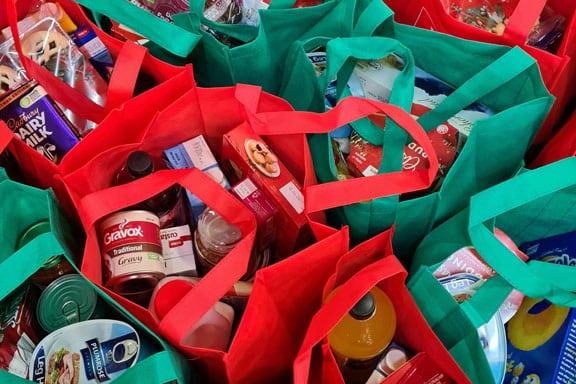
One of the benefits of my new job at the Community FoodBank of New Jersey is the opportunity to see so many people come and go in their pursuit of gathering food for the hungry. Unfailingly on any given day upon entering the building, I am greeted by someone new. "Hello, how are you," I say. And the response is always the same. "I'm blessed. How are you?" Every time this happens it makes me stop and smile.

Nestled in the eclectic bedroom community of Montclair, New Jersey is one of the country's fastest growing college campuses. Spreading over 246 acres, Montclair State University has a diverse population of 18,000 students (3,700 of them resident on campus) and 4,500 faculty and staff. Every fall there are new students launching an entirely different experience of their life journey. Others are returning, perhaps to their final year of college. But, they share a common bond of life, love, fear, joy, pain, expectation...

Easter is the liturgical season set aside for the purpose of celebrating new life in the risen Christ. For centuries, “Alleluia” has been the verbal response to this extraordinary gift. The Easter season ends on Pentecost Sunday, June 12; but the “Alleluias” continue, because new life continues to be offered.

In their impressive book Half the Sky: Turning Oppression into Opportunity for Women Worldwide, Nicholas Kristof and Sheryl Wudunn tell story after story of women in the developing world in order to create a call to arms against what they call “our era’s most pervasive human rights violation: the oppression of women and girls in the developing world.”

Inspiration is one of those things that can’t be described very easily. What is the source of an idea that floats from our unconscious mind into our awareness? Those of us who believe in God will give credit where credit is due, at the hands of our Creator. But whether we believe or not, inspiration leads to actions and concrete creations from that one moment of illumination. And all who are involved – in very immediate ways or as witness to the creation – are touched.

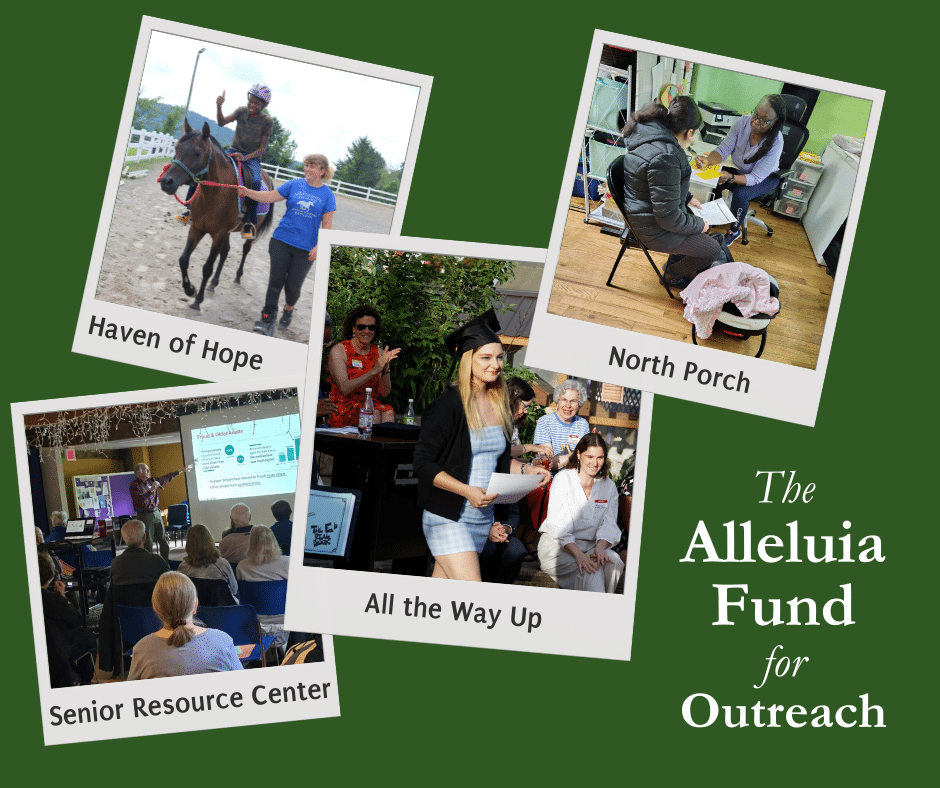
Although our society promises the magic of anti-aging elixirs, the psalmist affirms it is only in God that we can find true renewal. Not just as we get older, but at all times in our lives, God’s love and care strengthen us enough to give us wings. It is hard to imagine that children need that kind of renewal; it is usually the adults who can’t keep up. But some children have experiences that limit their abilities or weigh them down.

“Haven” has a different meaning from “home” or “house.” Broader than the simple sense of place, it includes the connotation of protection. A haven, like the word “sanctuary,” means a place of safety. Even more than safety, according to Webster, a haven can also be a place offering favorable opportunities.

Over the last two decades, the local community food pantry has become as ubiquitous as a Dunkin Donuts or a Starbucks. The Community Food Bank counts over 1500 of these pantries among its partners in the state of New Jersey. That means 1500 individual small community food pantries deliver an astounding 37 million pounds of food yearly. Sadly, there is that much need. But that also means there are over 1500 places and infinitely more opportunities to bring about healing and connection.